
Table of Contents
- The Strategy Meeting Trap
- Sign 1: Your Team Keeps Missing Quarterly Targets
- Sign 2: Leadership Meetings Feel Like Groundhog Day
- Sign 3: You’re Drowning in Systems That Don’t Talk to Each Other
- Sign 4: Good People Keep Leaving for “Better Opportunities”
- Sign 5: You Can’t Scale Without Breaking Something
- Sign 6: Profit Margins Are Shrinking Despite Revenue Growth
- Sign 7: You’re the Bottleneck in Every Decision
- Why Another Strategy Session Won’t Fix This
- The 100-Day Alternative
- FAQs
- Conclusion
The Strategy Meeting Trap
You’ve been here before. Conference room. Whiteboard covered in arrows and boxes. Team nodding along to the same conversations you had six months ago.
Strategy meetings feel productive. They aren’t.
Real transformation requires diagnosing root constraints across your entire business system. Not surface-level discussions about “doing better next quarter.”
If you recognize three or more of these signs, your business needs a structured transformation sprint, not another planning session.
Sign 1: Your Team Keeps Missing Quarterly Targets
Missing one quarter happens. Missing three quarters in a row signals deeper problems.
When targets consistently slip, the issue isn’t motivation or market conditions. It’s misalignment between your strategy, systems, and people capabilities.
Your team might be working hard on the wrong priorities. Or the right priorities with broken processes. Or the right processes without proper accountability structures.
This pattern indicates fundamental constraints in how work flows through your organization. Band-aid solutions won’t fix systematic breakdowns.
Sign 2: Leadership Meetings Feel Like Groundhog Day
Same issues. Same discussions. Same promises to “follow up offline.”
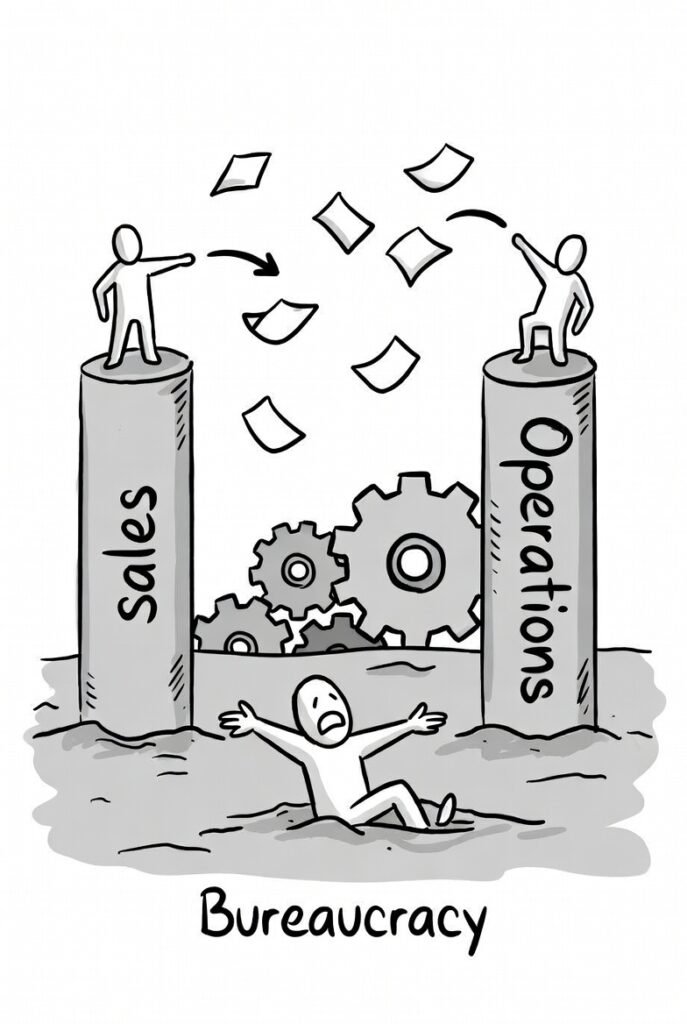
When leadership meetings recycle the same problems month after month, you’re treating symptoms instead of causes. The real constraints live deeper in your organizational structure.
You need diagnostic clarity on what’s actually blocking progress. Most leadership teams discuss what they can see, not what’s really happening in the operational layers below.
Sign 3: You’re Drowning in Systems That Don’t Talk to Each Other
Your CRM doesn’t sync with your project management tool. Your accounting system requires manual data entry from three different sources. Your team uses spreadsheets to bridge gaps between expensive software.
Technology should multiply your capabilities, not fragment them. When systems work in isolation, they create operational friction that slows every process.
This isn’t just an IT problem. It’s a strategic constraint that limits how fast you can move and how accurately you can measure performance.
Sign 4: Good People Keep Leaving for “Better Opportunities”
Exit interviews mention “growth opportunities” and “career development.” But the real reason is often structural.
High performers leave when they hit artificial ceilings created by unclear roles, broken processes, or misaligned incentives. They see the constraints more clearly than leadership does.
When talent retention becomes a recurring problem, examine the systems and structures that support (or limit) your people. Individual performance issues are usually organizational design issues.
Sign 5: You Can’t Scale Without Breaking Something
Every growth push creates new problems. Adding clients overwhelms operations. Hiring new people slows down existing teams. Expanding services dilutes quality.
This pattern reveals that your business lacks scalable systems. You’re growing through brute force instead of systematic capability building.
Sustainable growth requires integrated improvements across people, processes, and technology. Piecemeal fixes create more complexity, not more capacity.
Sign 6: Profit Margins Are Shrinking Despite Revenue Growth
Revenue climbs but profit stays flat or declines. You’re working harder for the same (or less) financial return.
This squeeze usually stems from operational inefficiencies, pricing misalignment, or cost structures that don’t scale with revenue. The root causes span multiple business functions.
Margin erosion is a warning signal that your business model has structural problems. These require systematic diagnosis, not quick cost cuts.
Sign 7: You’re the Bottleneck in Every Decision
Teams wait for your approval on routine decisions. Projects stall when you’re unavailable. Strategic initiatives depend entirely on your personal involvement.
This centralization might feel like control, but it’s actually a constraint on your business’s growth potential. Your bandwidth becomes the limiting factor for everything.
Breaking this pattern requires building decision-making systems and accountability structures that function without constant CEO intervention.
Why Another Strategy Session Won’t Fix This
Strategy meetings address what to do. They don’t diagnose why current execution isn’t working.
Most businesses don’t lack good ideas. They lack systematic execution capability across their Minds (people and structure), Systems (processes and accountability), and Tech (tools and data integration).
Surface-level planning can’t fix deep structural constraints. You need comprehensive diagnosis before you can design effective solutions.
The 100-Day Alternative
Instead of another strategy retreat, consider a structured transformation sprint. This approach starts with deep diagnostic work across 80+ business touchpoints to identify the specific constraints limiting your performance.
The first four weeks focus entirely on diagnosis. Weeks 5-12 execute rapid improvements on the 2-3 highest-impact constraints identified.
This methodology addresses the integrated nature of business constraints. Problems in one area (like technology) often stem from issues in another area (like organizational structure or process design).
A 100-day sprint creates measurable progress while building sustainable systems for continued improvement. Learn more at 100dayrenew.com.
FAQs
How do I know if my business problems require transformation or just better execution?
If you’ve tried multiple execution improvements over 6-12 months without sustained results, you likely have structural constraints that require systematic transformation. Execution problems are usually symptoms of deeper organizational design issues.
What’s the difference between a transformation sprint and traditional consulting?
Traditional consulting often takes 6-18 months and focuses on advisory recommendations. A transformation sprint delivers diagnostic insights and executed improvements within 100 days, emphasizing implementation over reports.
Can a business transformation sprint work for companies under $5M revenue?
Transformation sprints work best for established businesses with complex operational systems. Smaller companies often benefit more from focused process improvements rather than comprehensive organizational transformation.
How do I convince my leadership team that we need transformation, not just better planning?
Present evidence of recurring problems despite multiple planning efforts. Focus on the cost of continued constraint-driven performance versus the investment in systematic improvement.
What happens after the 100-day sprint ends?
Effective transformation sprints create sustainable playbooks and accountability systems. They also establish quarterly review processes to maintain momentum and address new constraints as they emerge.
How much CEO time does a transformation sprint require?
Expect significant involvement during the diagnostic phase (weeks 1-4) and regular check-ins during execution (weeks 5-12). However, the goal is to reduce your role as a bottleneck, not increase it.
What if we discover problems that can’t be fixed in 100 days?
Comprehensive diagnostics often reveal constraints that require longer-term solutions. A good transformation sprint prioritizes quick wins while creating roadmaps for complex, multi-quarter improvements.
Conclusion
Recognition is the first step toward transformation. If your business shows multiple signs from this list, strategy meetings won’t solve the underlying constraints.
You need systematic diagnosis and rapid execution focused on your highest-impact bottlenecks. The alternative is continuing to work harder for diminishing returns while your best people find opportunities elsewhere.
Stop adjusting. Start transforming. Your business has more potential than your current systems allow.