
There is a quiet crisis running through the professional world, and it has nothing to do with the economy, geopolitics, or the pace of technology. It is a crisis of definition. We have allowed “success” to be defined for us, by people with a vested interest in our insecurity.
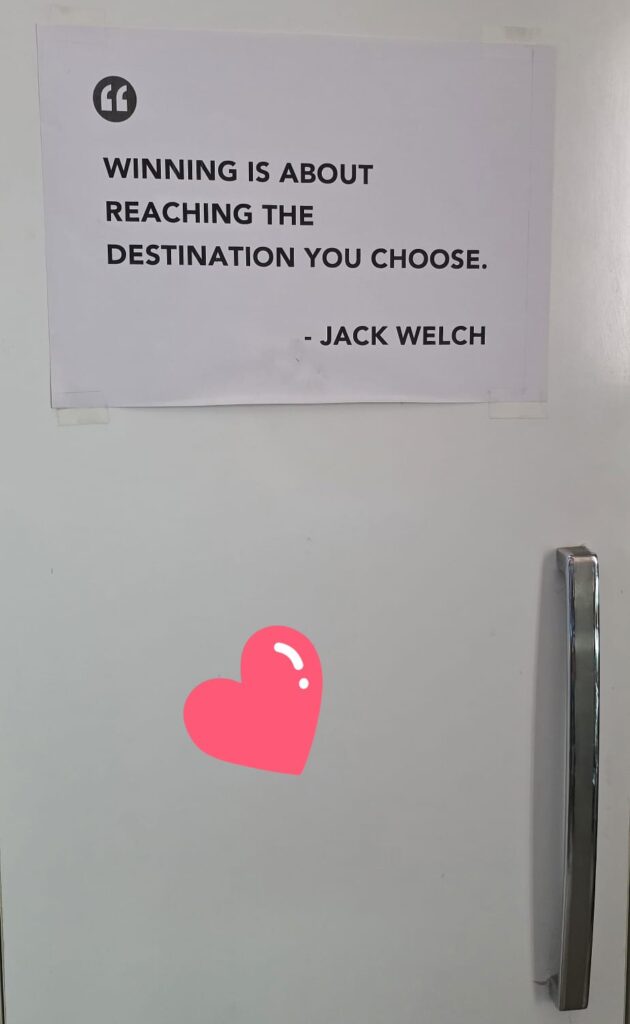
Jack Welch said something deceptively simple: “Winning is about reaching the destination you choose.” That one word, “choose”, changes everything. It implies ownership. Intentionality. The freedom to set a finish line that actually fits your life. And yet, if you spend twenty minutes on any social media platform today, you will find that freedom being quietly stolen.
The Manufactured Benchmark
The success narrative that dominates social media is remarkably narrow. It is urban, it is financial, and it scales. Revenue in crores. Headcount in hundreds. Raised from a fund with a recognisable name. Photographed in a boardroom with floor-to-ceiling glass.
This is not a description of success. It is a description of a very specific kind of startup trajectory, dressed up as the universal definition of winning.
The problem is not that these stories exist. The problem is that they have crowded out everything else. We share them, we celebrate them, we tag friends in them. And slowly, insidiously, they become the measuring stick. Not because we consciously chose them, but because repetition is the oldest form of persuasion.
A generation of founders, professionals, and young people is now walking around with somebody else’s destination in their heads, wondering why they feel inadequate.
The Stories We Do Not Tell
I want to tell you about a brother who sold vegetables on the street. Not as a temporary hustle, not as a chapter in a rags-to-riches arc, but as a sustained, deliberate sacrifice. He did it to fund his sister’s nursing education. She passed, joined a government hospital, and has spent years in a ward most of us would find difficult to walk through for five minutes.
She sets a drip at 3 AM. She explains a diagnosis to a family that has never seen a doctor before. She shows up when the system is broken and under-resourced, because someone has to.
Is that a success story?
If we are honest, most of us feel a moment of hesitation before answering. And that hesitation is the problem. We have been so thoroughly conditioned to associate success with scale, visibility, and wealth accumulation that genuine human contribution now requires a case to be made.
The brother’s sacrifice was real. The sister’s service is real. The impact on hundreds of patients is real. But there is no TED talk. No funding announcement. No LinkedIn post with 50,000 impressions. So it simply does not exist in the cultural ledger of winning.
What This Actually Costs
The distortion is not merely philosophical. It has material consequences.
I work with founders and CXOs across industries. A consistent pattern I see is the abandonment of viable, meaningful work in pursuit of a version of success that was never suited to the individual’s actual strengths, context, or values. People walk away from businesses that are profitable, functional, and genuinely useful, because those businesses do not look impressive at a networking event.
Young professionals in mid-tier cities feel a chronic low-grade shame about their careers, not because anything is objectively wrong, but because the benchmark being applied to them was designed for a different geography, a different capital base, and a different risk profile.
This is what happens when you let someone else define your destination. You spend your energy running a race you never entered voluntarily.
There is also an economic cost that nobody discusses. When we celebrate only the outliers, we implicitly devalue the vast middle layer of the economy, the engineer running a precision component plant in Pune, the teacher in a semi-urban school who produces remarkable results year after year, the logistics operator who built reliability into a broken supply chain. These people are the actual spine of any functioning economy. They receive almost none of the cultural validation.
Why Social Media Is Structurally Incapable of Fixing This
It would be comforting to believe that the platforms will correct themselves, that authentic stories will eventually find their audience, that the algorithm will reward depth and nuance over performance and spectacle.
They will not. The architecture of these platforms optimises for engagement, and engagement correlates strongly with aspiration, envy, and the performance of success. A post about a nurse working a double shift in a government hospital will always lose to a post about a founder closing a Series B. Not because people are shallow, but because the platform rewards a specific emotional register.
This is not a technology problem. It is a values problem. And values cannot be fixed by engineers.
The responsibility sits with those of us who have a platform, a voice, and enough life experience to know the difference between a performance and a life well-lived.
Redefining the Destination
Welch’s insight survives the noise because it is structurally sound. Winning requires a destination. The destination must be chosen. And “chosen” means it has to come from within, not from a feed, not from a peer cohort, not from what seems fundable or shareable.
For a first-generation professional in a small town, winning might be a stable career that breaks a cycle of financial precarity in the family. That is a destination. It is chosen. It is real.
For an engineer who has spent thirty years mastering a manufacturing process, winning might be the respect of the people who work on his shop floor and the knowledge that the products leaving his facility are genuinely reliable. That is a destination. It is worth reaching.
For the brother selling vegetables on the street, winning was the day his sister received her posting letter.
None of these fit the template. All of them are legitimate.
What We Should Actually Be Doing
Those of us who create content, lead organisations, or work with the next generation of professionals have a specific obligation here. We need to expand the vocabulary of success. Not to devalue ambition or wealth creation, those are legitimate destinations too, but to stop letting them be the only story on the table.
Celebrate the turnaround, not just the scale-up. Celebrate the teacher, not just the edtech founder. Celebrate the nurse, not just the hospital chain. Celebrate the craftsman, not just the platform.
Every time we share a story that measures success in terms of human dignity, community contribution, and personal integrity, we are doing something the algorithm will not do for us. We are widening the definition of winning.
And in doing so, we might just give someone the permission to chase a destination that is actually theirs.
Sam (Sakti Mukherjee) is a Strategy Consultant and Executive Coach with over 45 years of experience across India, the GCC, and Africa. He works with founders and CXOs on business transformation, performance, and sustainable growth.
Winning and Success Are Slowly Draining Us
There is a quiet crisis running through the professional world, and it has nothing to do with the economy, geopolitics, or the pace of technology. It is a crisis of definition. We have allowed “success” to be defined for us, by people with a vested interest in our insecurity.
Jack Welch said something deceptively simple: “Winning is about reaching the destination you choose.” That one word, “choose”, changes everything. It implies ownership. Intentionality. The freedom to set a finish line that actually fits your life. And yet, if you spend twenty minutes on any social media platform today, you will find that freedom being quietly stolen.
The Manufactured Benchmark
The success narrative that dominates social media is remarkably narrow. It is urban, it is financial, and it scales. Revenue in crores. Headcount in hundreds. Raised from a fund with a recognisable name. Photographed in a boardroom with floor-to-ceiling glass.
This is not a description of success. It is a description of a very specific kind of startup trajectory, dressed up as the universal definition of winning.
The problem is not that these stories exist. The problem is that they have crowded out everything else. We share them, we celebrate them, we tag friends in them. And slowly, insidiously, they become the measuring stick. Not because we consciously chose them, but because repetition is the oldest form of persuasion.
A generation of founders, professionals, and young people is now walking around with somebody else’s destination in their heads, wondering why they feel inadequate.
The Stories We Do Not Tell
I want to tell you about a brother who sold vegetables on the street. Not as a temporary hustle, not as a chapter in a rags-to-riches arc, but as a sustained, deliberate sacrifice. He did it to fund his sister’s nursing education. She passed, joined a government hospital, and has spent years in a ward most of us would find difficult to walk through for five minutes.
She sets a drip at 3 AM. She explains a diagnosis to a family that has never seen a doctor before. She shows up when the system is broken and under-resourced, because someone has to.
Is that a success story?
If we are honest, most of us feel a moment of hesitation before answering. And that hesitation is the problem. We have been so thoroughly conditioned to associate success with scale, visibility, and wealth accumulation that genuine human contribution now requires a case to be made.
The brother’s sacrifice was real. The sister’s service is real. The impact on hundreds of patients is real. But there is no TED talk. No funding announcement. No LinkedIn post with 50,000 impressions. So it simply does not exist in the cultural ledger of winning.
What This Actually Costs
The distortion is not merely philosophical. It has material consequences.
I work with founders and CXOs across industries. A consistent pattern I see is the abandonment of viable, meaningful work in pursuit of a version of success that was never suited to the individual’s actual strengths, context, or values. People walk away from businesses that are profitable, functional, and genuinely useful, because those businesses do not look impressive at a networking event.
Young professionals in mid-tier cities feel a chronic low-grade shame about their careers, not because anything is objectively wrong, but because the benchmark being applied to them was designed for a different geography, a different capital base, and a different risk profile.
This is what happens when you let someone else define your destination. You spend your energy running a race you never entered voluntarily.
There is also an economic cost that nobody discusses. When we celebrate only the outliers, we implicitly devalue the vast middle layer of the economy, the engineer running a precision component plant in Pune, the teacher in a semi-urban school who produces remarkable results year after year, the logistics operator who built reliability into a broken supply chain. These people are the actual spine of any functioning economy. They receive almost none of the cultural validation.
Why Social Media Is Structurally Incapable of Fixing This
It would be comforting to believe that the platforms will correct themselves, that authentic stories will eventually find their audience, that the algorithm will reward depth and nuance over performance and spectacle.
They will not. The architecture of these platforms optimises for engagement, and engagement correlates strongly with aspiration, envy, and the performance of success. A post about a nurse working a double shift in a government hospital will always lose to a post about a founder closing a Series B. Not because people are shallow, but because the platform rewards a specific emotional register.
This is not a technology problem. It is a values problem. And values cannot be fixed by engineers.
The responsibility sits with those of us who have a platform, a voice, and enough life experience to know the difference between a performance and a life well-lived.
Redefining the Destination
Welch’s insight survives the noise because it is structurally sound. Winning requires a destination. The destination must be chosen. And “chosen” means it has to come from within, not from a feed, not from a peer cohort, not from what seems fundable or shareable.
For a first-generation professional in a small town, winning might be a stable career that breaks a cycle of financial precarity in the family. That is a destination. It is chosen. It is real.
For an engineer who has spent thirty years mastering a manufacturing process, winning might be the respect of the people who work on his shop floor and the knowledge that the products leaving his facility are genuinely reliable. That is a destination. It is worth reaching.
For the brother selling vegetables on the street, winning was the day his sister received her posting letter.
None of these fit the template. All of them are legitimate.
What We Should Actually Be Doing
Those of us who create content, lead organisations, or work with the next generation of professionals have a specific obligation here. We need to expand the vocabulary of success. Not to devalue ambition or wealth creation, those are legitimate destinations too, but to stop letting them be the only story on the table.
Celebrate the turnaround, not just the scale-up. Celebrate the teacher, not just the edtech founder. Celebrate the nurse, not just the hospital chain. Celebrate the craftsman, not just the platform.
Every time we share a story that measures success in terms of human dignity, community contribution, and personal integrity, we are doing something the algorithm will not do for us. We are widening the definition of winning.
And in doing so, we might just give someone the permission to chase a destination that is actually theirs.
Sam (Sakti Mukherjee) is a Strategy Consultant and Executive Coach with over 45 years of experience across India, the GCC, and Africa. He works with founders and CXOs on business transformation, performance, and sustainable growth.