
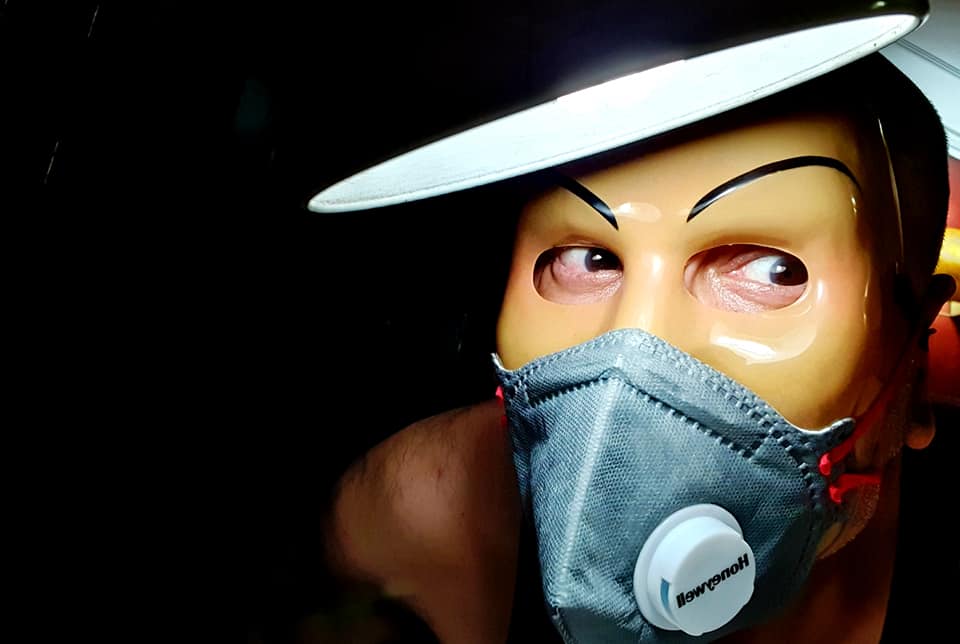
Why predictable business failures keep happening, and who pays the price
The RMS Titanic sank on April 15, 1912 — not because the ocean was unusually dangerous that night, but because a series of known risks were systematically ignored. The ship sailed at speed through waters where icebergs had been reported. Visibility was low, the crew couldn’t brake in time, and the damage from the collision was structurally unsurvivable. Post-collision, the absence of adequate lifeboats converted a survivable disaster into a mass casualty event.
Every single failure in that sequence was predictable. The iceberg didn’t appear from nowhere. The braking problem was a function of speed and physics. The lifeboat shortage was a documented fact before the ship left Southampton.
What sank the Titanic wasn’t the iceberg. It was the collective, institutional belief that the iceberg wouldn’t matter.
I’ve spent decades working inside and around Indian manufacturing businesses — mostly MSMEs, the sector that employs the most people and receives the least honest attention. What I see in struggling businesses is structurally identical to what happened on that ship. Not the drama of sudden collapse, but the slow, managed, consensual sailing toward an iceberg everyone can see and nobody will name.
I call it the Titanic Mask.
The anatomy of a predictable failure
Businesses don’t typically die from a single catastrophic error. They die from an accumulation of small, manageable-looking problems that compound over time while everyone involved finds reasons to stay the course.
The pattern is consistent. Cash flow stress appears first — usually disguised as a timing issue, a delayed receivable, a seasonal dip. Then comes the informal accounting: two sets of books, or one set that tells the bank what it needs to hear. Quality systems erode because fixing them costs money the business doesn’t have. SOPs disappear because the owner-manager decides they slow things down. Labour is misused — skilled workers doing unskilled work, overtime replacing investment in capacity. Safety is deferred because nothing has gone wrong yet.
None of these individually feel fatal. Together, they are.
The promoter is optimistic — sometimes genuinely, sometimes performatively. The lender is nervous but has already extended credit and can’t afford to recognize the loss. The auditor is reviewing numbers that have been prepared for review. The regulatory inspector is checking compliance boxes, not asking whether the business is viable.
Each of these actors is behaving rationally within their own incentive structure. The lender extends because recognizing an NPA is worse for this quarter’s numbers than rolling the loan. The auditor signs because qualified opinions create friction. The promoter projects confidence because admitting distress triggers consequences before solutions are in place.
The Titanic Mask isn’t one person’s delusion. It’s a collective, distributed, institutionally-reinforced suspension of honesty.
Who actually pays
There’s a fiction embedded in how we talk about business failure: that risk is shared by all stakeholders.
It isn’t.
Promoters have commercial exposure, but they also have assets, relationships, and the ability to negotiate exits, restructure debt, or start again. Lenders have security, provisions, and ultimately the ability to write off losses against a diversified portfolio. Auditors and regulators face reputational and legal risk in theory; in practice, accountability is rare and prosecution rarer.
Employees have a salary. That’s it.
They have no equity upside when the business thrives. They have no recovery mechanism when it fails. They don’t sit in the meetings where the business’s trajectory is assessed and managed. They find out when the salary stops, or when they arrive at work to find the gates locked.
In most MSME failures I’ve observed, the employees — particularly shop floor workers and junior staff — are the last to know and the most severely damaged. The owner renegotiates. The bank restructures. The auditor moves to the next client. The worker looks for another job in a market that’s already crowded.
This asymmetry is not accidental. It’s structural. And until it’s named clearly, it won’t be addressed.
Why nobody speaks
If the problems are visible and the outcomes are predictable, why doesn’t someone intervene earlier?
The honest answer is that the person who speaks first bears the highest immediate cost. The lender who flags a stressed account invites scrutiny of their own portfolio. The auditor who qualifies an opinion risks losing the client. The promoter who admits distress loses supplier credit, customer confidence, and sometimes the ability to raise emergency capital.
The rational move, for each individual actor, is to stay quiet and hope the next quarter improves. They are collectively betting that the iceberg will miss.
Sometimes it does. Businesses that should have failed don’t — they catch a tailwind, land a large order, find a buyer. Survivorship bias reinforces the silence. The businesses that don’t catch that tailwind sink, and the post-mortems are rarely honest enough to identify when the trajectory became irreversible.
There’s also a cultural dimension in Indian business — particularly in family-run MSMEs — where admitting distress feels like personal failure rather than a business condition requiring management. The promoter’s identity is bound up in the enterprise. Asking for help is experienced as capitulation. This is understandable. It’s also lethal when it delays intervention past the point where intervention can help.
What recoverable actually looks like
Most of the businesses I’ve seen in distress were recoverable — not easily, not without pain, but recoverable — at the point when the problems became visible. By the time they became public, the window had usually closed.
Recovery requires three things that the Titanic Mask prevents: an honest assessment of the current state, acceptance that something fundamental needs to change, and the willingness of at least one party with leverage to drive that change rather than wait it out.
The honest assessment is the hardest part. It means the promoter accepts that the numbers as presented don’t reflect reality. It means the lender acknowledges that extending credit is deferring a problem, not solving it. It means the auditor is prepared to say what they actually see.
In my experience, the businesses that survive serious distress almost always have one common factor: someone spoke the truth out loud, early enough for it to matter, and someone with power heard it and acted. That person is rarely celebrated. They’re usually the one who created short-term disruption by refusing to wear the mask.
The policy dimension
This problem isn’t purely behavioural. The incentive structures that sustain the Titanic Mask are partly a policy design problem.
Credit assessment for MSMEs in India remains disproportionately asset-focused. The question lenders are structured to ask is: what collateral secures this loan? The question they should be asking is: does this business generate enough cash to service this debt sustainably? These are different questions with different answers, and when the first question is primary, distressed businesses with hard assets can access credit long past the point of economic viability.
Regulatory inspections — labour, safety, environmental — are largely compliance theatre. The inspector checks whether the paperwork exists. Nobody is systematically asking whether the business is structured to survive. That’s not entirely the regulator’s job, but the absence of any mechanism for early-stage distress identification means problems compound unobserved.
The tax and regulatory structure also creates perverse incentives around scale. Staying below certain employee thresholds, keeping transactions informal, avoiding the formalization that would make problems visible — all of these are rational responses to a regulatory environment that penalizes transparency. The result is that the businesses most likely to be in distress are also the ones least likely to have any early warning system operating.
The Titanic sank in under three hours
From the moment the Titanic hit the iceberg to the moment it went under was two hours and forty minutes. The lookouts had been watching for obstacles. The radio operators had received ice warnings. The physics of what would happen if they hit something at that speed were not mysterious.
The businesses I’m describing don’t sink in three hours. They sink over years, slowly enough that each incremental deterioration can be absorbed, explained, or deferred. That extended timeline is what makes the Titanic Mask so durable — and so dangerous. There’s always a reason to wait one more quarter.
The question isn’t whether these businesses are recoverable. Many of them are, at the right point.
The question is whether anyone in the room will take off the mask before the ship goes under.
That requires one person — a lender, a board member, a senior manager, an auditor — to say clearly: we have a problem, and pretending otherwise is making it worse.
It’s not complicated. It’s just costly in the short term for whoever says it.
The employees who never had the option to wear the mask in the first place are the ones who need someone to take it off.
The author is a management consultant with extensive experience in Indian manufacturing and the MSME sector. Views are based on his own and collected opinion.